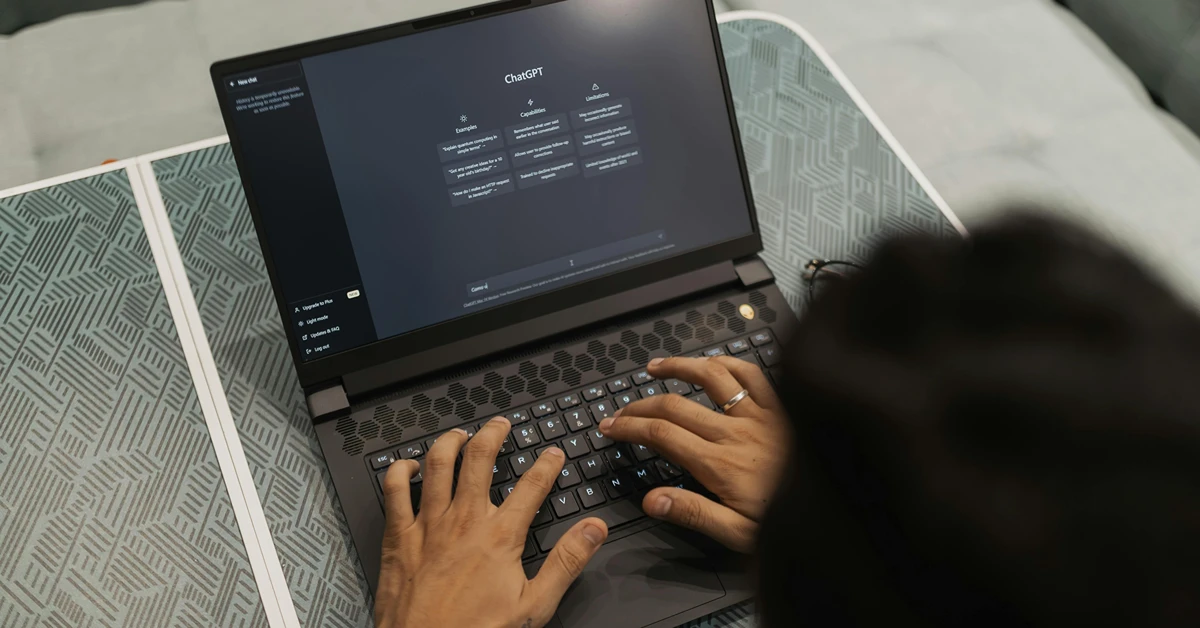
How AI Is Transforming Small Businesses (and How to Start Simply)
March 3, 2026

In short
AI for small businesses is now practical and affordable: owners use it to answer customer questions, draft marketing content, handle admin and summarise data. The simplest way to adopt AI is to pick one repetitive task, test a tool for 30 days with a human checking the output, measure the time saved, and only then expand.
AI for small businesses has moved from experiment to everyday tool. A few years ago, machine learning was something only large companies with data teams could afford. Today a two-person business can use AI to answer customer questions at midnight, turn a voice note into a proposal, summarise a month of sales, or draft a week of social posts in minutes. The technology isn't magic, and it makes mistakes, but used carefully it gives small teams leverage they didn't have before.
I build websites, automations and AI agents for small businesses, so I see both the wins and the disappointments. This guide covers how small businesses are actually using AI, where it helps most, what to watch out for, and a simple way to adopt it without disrupting how you work.

How AI is changing small business
The biggest change isn't a single tool. It's that the cost of "thinking work" has fallen. Tasks that needed a person's time, such as writing a first draft, sorting emails, categorising expenses or answering the same question for the hundredth time, can now be done in seconds and then checked by a person. For a small business, that changes three things:
- Capacity: a small team can respond faster and handle more customers without hiring straight away.
- Availability: an AI assistant on your website or WhatsApp can answer common questions outside office hours.
- Access to skills: owners who aren't writers, designers or analysts can get a competent first version and refine it.
How small businesses are using AI today
Customer service
Chat assistants trained on your own FAQs, policies and product information can answer routine questions (opening hours, prices, delivery times, how to book) and hand anything complex to a person. The key word is trained: a generic chatbot that guesses is worse than none. Connected properly, an assistant can also check order status or take a booking. I cover how this works in practice on my AI agent development page.
Marketing and content
AI writing tools help with blog outlines, product descriptions, email newsletters, ad variations and social captions. They're best at first drafts and variations. They're weakest at original insight, so the strongest results come from feeding them your own expertise, customer questions and examples, then editing hard. Search engines reward helpful content regardless of how it was drafted, but unedited AI text tends to be generic and easy to spot.
Sales and admin
- Turning meeting notes or voice memos into follow-up emails and proposals
- Sorting and drafting replies in a busy inbox
- Extracting data from invoices, receipts and forms into a spreadsheet or accounting tool
- Scheduling and reminders
- Writing job adverts, policies and standard operating procedures
Data and decisions
You can now ask questions of your own data in plain language: "Which products sold best last quarter?" or "Which customers haven't ordered in 90 days?" AI can summarise reviews to show common complaints, spot trends in enquiries and draft a simple forecast. It doesn't replace judgement, but it gets you to the useful question faster.
Websites and operations
On the websites I build, AI typically shows up as a smart assistant that answers questions from the site's own content, automatic tagging and summarising of incoming enquiries, product description drafts for online stores, and workflows that move information between the website, email and CRM without copy-pasting.
Simplifying AI adoption in small business operations
The businesses that get value from AI rarely start with a big "AI strategy". They start small and practical. This is the 30-day approach I recommend:
- List your repetitive tasks. Spend a week noting anything you or your team do over and over: the same emails, the same questions, the same data entry.
- Pick one task. Choose something frequent, low-risk and easy to check, such as drafting replies to common enquiries. Avoid anything legal, financial or safety-critical as a first project.
- Choose a tool you already have access to. Many tools you already pay for, such as your email, office suite, CRM or website platform, now include AI features. Start there before buying something new.
- Keep a human in the loop. For the first month, a person reviews every output before it reaches a customer.
- Measure. Record the time the task took before and after, and note any errors. If it isn't saving time after a few weeks, drop it and try another task.
- Write down what works. Save the prompts, instructions and examples that produce good results so anyone on the team can repeat them.
- Expand gradually. Once one task works reliably, connect it to your other systems or move to the next task on your list.
The risks and how to manage them
| Risk | What it looks like | How to manage it |
|---|---|---|
| Wrong answers | AI states something false confidently | Ground it in your own content and review outputs |
| Data privacy | Customer data pasted into public tools | Use business plans with data controls; don't paste sensitive data |
| Generic content | Marketing that sounds like everyone else | Add your own examples, opinions and customer stories |
| Over-automation | Customers trapped talking to a bot | Always offer an easy route to a human |
| Tool sprawl | Many subscriptions, little use | One task, one tool, measured before expanding |
Check the data protection rules that apply to you. In Kenya that's the Data Protection Act, in the UK and EU it's GDPR, and other countries have their own. A good rule: if you wouldn't email the information to a stranger, don't paste it into a free AI tool.
What AI won't replace
AI is good at speed and volume. It's poor at trust, taste, accountability and relationships, which are exactly what customers value most in a small business. The owner who knows a regular customer's name, the tradesperson who explains options honestly, the consultant whose judgement clients pay for: those don't get automated. The practical view is that AI takes over parts of jobs, not whole jobs, and frees people for the work only they can do. I make a similar argument about my own field in will AI replace web developers?
AI and small business in the future
The direction is clear even if the details change monthly. AI tools are moving from chat windows you visit to agents that carry out multi-step tasks inside the software you already use: booking, ordering, following up and reporting. Customers are also starting to find businesses through AI assistants and AI-powered search, not just traditional search results. That makes two things more important for small businesses: having a fast, well-structured website with clear answers to customer questions, and having tidy, accurate business information (services, prices, hours, policies) that both people and AI systems can read.
Where to start this week
- Pick one repetitive task and test an AI tool on it for 30 days.
- Collect your 20 most common customer questions and answer them properly on your website. This helps customers, search engines and AI assistants.
- Set a simple rule for what data can and can't go into AI tools.
If you'd like help adding an AI assistant to your website, connecting your tools or automating a workflow, see my AI agent development and API integration services, or get in touch.
Frequently asked questions
How can a small business start using AI?
Start with one repetitive, low-risk task, such as drafting replies to common enquiries. Use an AI feature in a tool you already have, keep a person reviewing the output, and measure the time saved before expanding.
Is AI affordable for small businesses?
Often, yes. Many AI features are built into software you already pay for, and standalone tools commonly offer small-business plans. The bigger cost is the time to set it up well, which is why starting with one task makes sense.
What is the impact of AI on small businesses?
The main impact is more capacity: faster responses, quicker first drafts and less manual admin. The risks are mistakes, privacy issues and generic content, which you manage with human review and clear rules.
Will AI replace small business employees?
It replaces tasks more than jobs. Most small businesses use AI to remove repetitive work so their people can spend more time with customers and on work that needs judgement.